Stereotactic Radiosurgery & Radiotherapy (SRS/SRT)
Non-surgical, high-dose targeting specifically designed for cranial lesions, acoustic neuromas, and brain metastases.
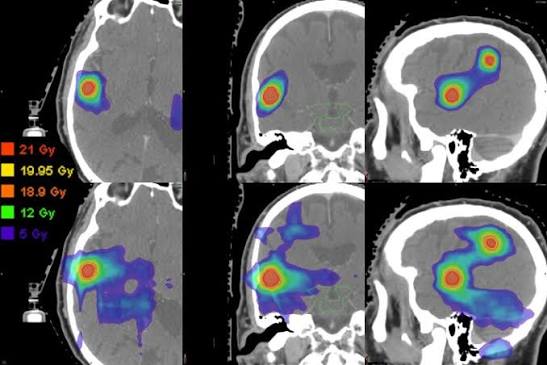
Stereotactic Radiosurgery (SRS) is a highly specialized, non-invasive form of radiation therapy used to treat tumors and other abnormalities in the brain. Despite the name 'radiosurgery', it involves no surgical incision. Instead, it uses highly focused beams of radiation to treat lesions with surgical precision.
SRS vs. SRT
When the treatment is completed in a single session, it is referred to as Stereotactic Radiosurgery (SRS). When the treatment is broken up into 2 to 5 sessions (fractions) to protect critical structures like the optic nerves or brainstem, it is called Stereotactic Radiotherapy (SRT).
How Cranial Sparing Works
SRS/SRT relies on a specialized headframe or custom thermoplastic mask to keep the patient's head completely immobile. Dozens of small radiation beams intersect precisely at the center of the tumor. While each individual beam has a low dose that passes harmlessly through normal brain tissue, the point where all beams converge receives a highly destructive dose of radiation, killing the tumor cells while sparing normal brain function.
Clinical Indications
This radiotherapy procedure is typically indicated for the following oncological conditions:
Clinical Benefits
Treatment Profile
Technology Used
Stereotactic Head Frames, High-Resolution Brain Lab planning software, Micro-multileaf Collimators
Clinical Timeline
1 session (SRS) or 2 to 5 sessions (SRT)
Administering Location
HCG Cancer Centre, Ayodhya Chowk, Rajkot
Lead Radiation Oncologist
Dr. Sarthak Kumar Mohanty, MD
Patient Support
Have questions about insurance, scheduling, or what to expect? Our clinical coordinators at HCG Cancer Centre are here to guide you.
Call +91 82382 86706